Newport and Middletown leaders say the biggest risk missing out on regionalization is all the opportunities and financial help associated with the move. #MiddletownRI
FOR IMMEDIATE RELEASE
CONTACT: Matt Sheley at (401) 842-6543 or msheley@middletownri.com
CRUNCH TIME FOR REGIONALIZATION, BOND
NEWPORT, R.I. (OCTOBER 24, 2022) – It’s getting down to crunch time for school regionalization and a $235 million school bond.
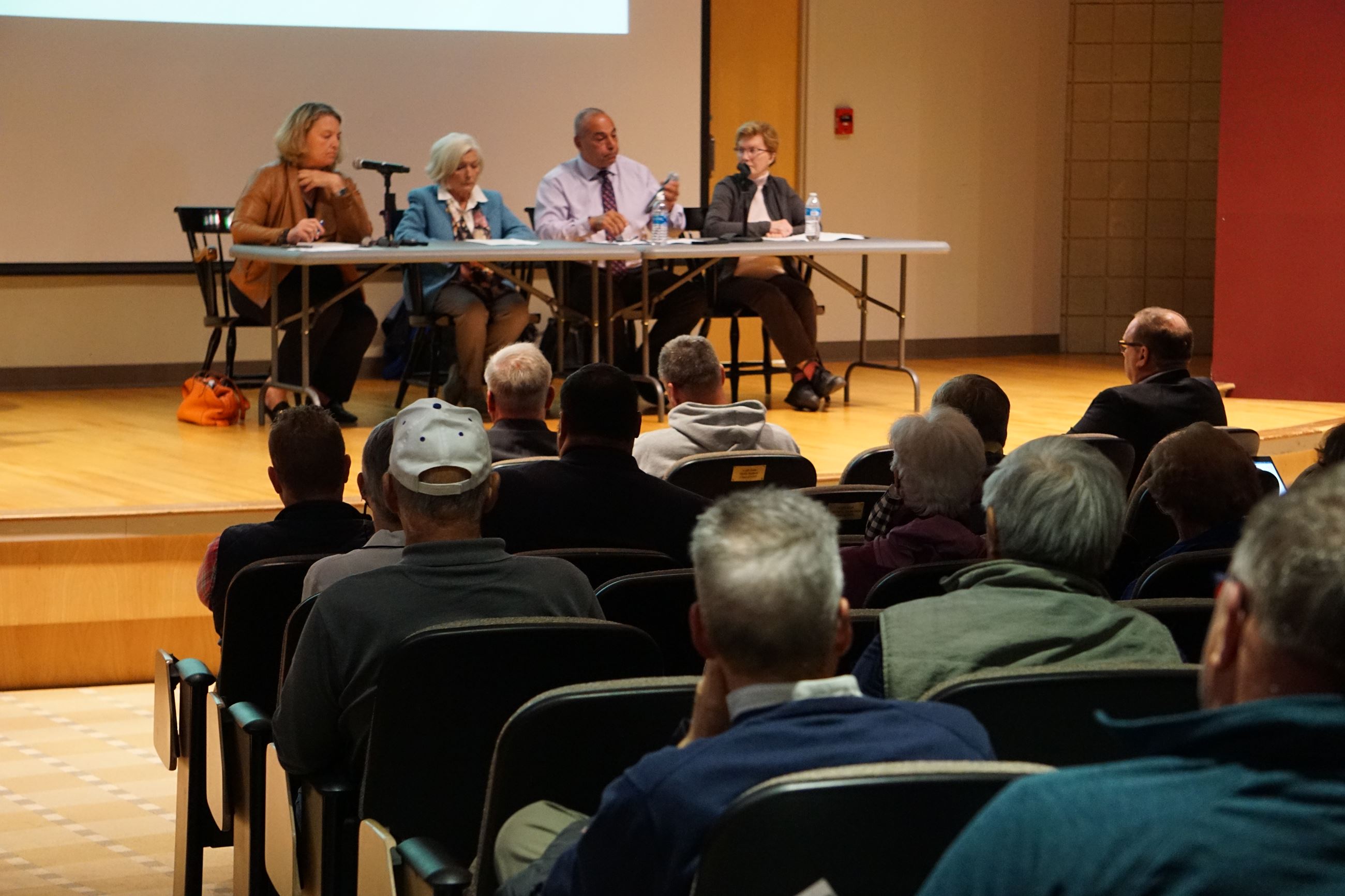
With two weeks until Election Day, Newport and Middletown council members came together Monday night from the CCRI Newport campus to share information and answer questions about the school proposal.
The session was the latest for a busy group, which has been meeting with the local Rotary club, at area senior centers and other organizations to spread the word about the benefits of ballot Questions 4 and 5 as well as Question 5 in Newport.
The Newport and Middletown school committees are scheduled to meet Thursday, Oct. 27 at 5:30 pm from the Oliphant administration building, 26 Oliphant Lane.
“Sometimes, things seem impossible until they’re done,” Middletown Town Council President Paul M. Rodrigues said. “This is certainly a good start to get things done…I think this can evolve into something great.”
“This regionalization effort is really just the start to a full regionalized system,” Vice Chairwoman Lynn Underwood Ceglie added. “I see this as a positive with opportunities.”
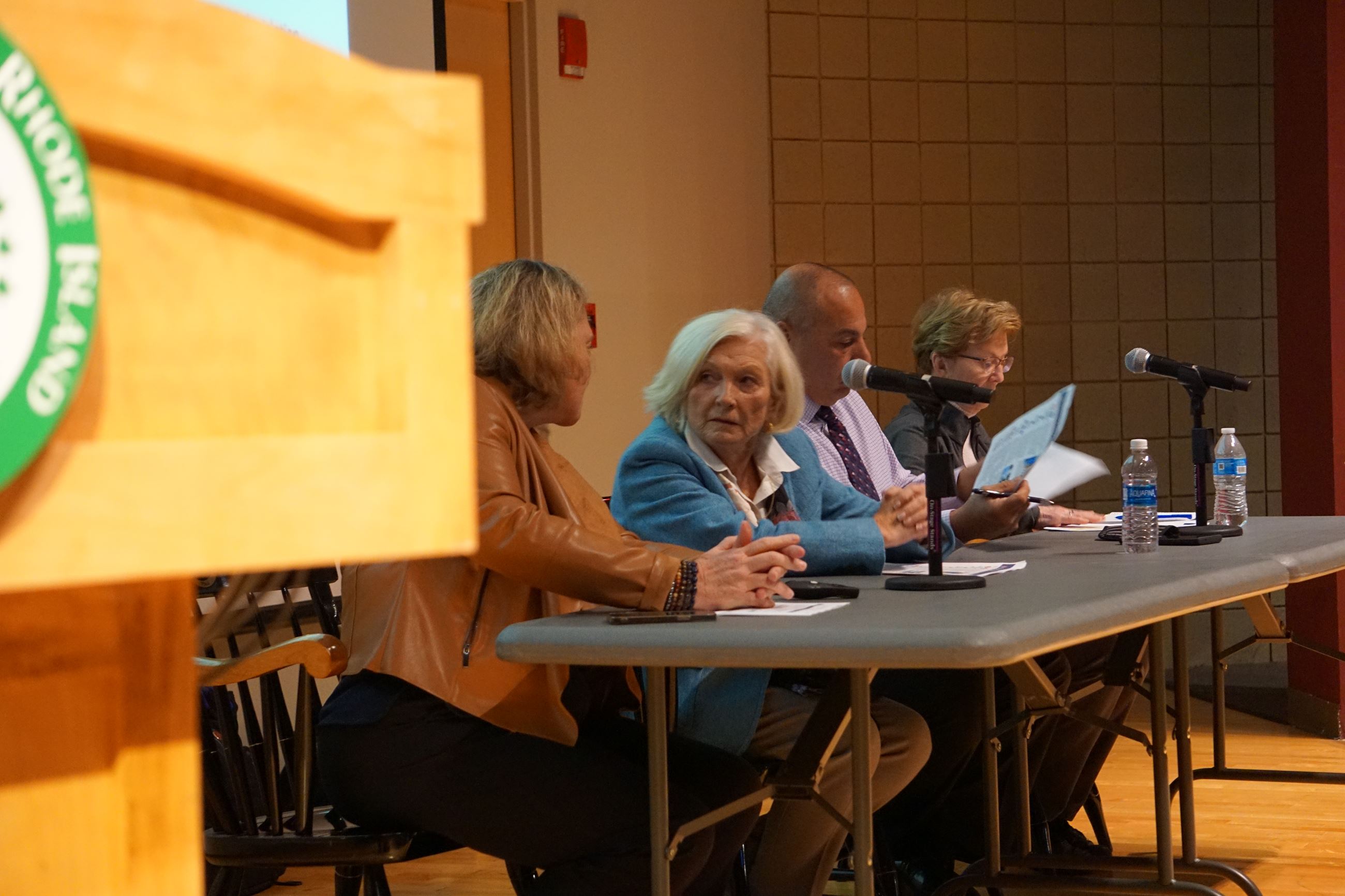
Opening the forum before an audience of about 75 people, moderator Joseph Pratt thanked everyone on hand for their interest. Pratt serves as the executive director and CEO of the Boys & Girls Club of Newport County.
Then, Pratt introduced those on stage — Newport Mayor Jeanne-Marie Napolitano and Ceglie along with Rodrigues and Middletown Councilwoman Barbara A. VonVillas.
Newport Superintendent Colleen Burns Jermain, Middletown Superintendent Rosemarie Kraeger and many members of the councils and School Committees were among those in the audience.
From there, Ceglie moved through a slideshow presentation that covered the benefits of regionalization, which included a list of a dozen items that were just scratching the surface.
After the presentation, Pratt read questions submitted from the crowd on everything about why the school superintendents haven’t voiced their feelings on regionalization to the potential name of the mascot for the district, something everyone took a pass on.
In order for the proposal to move forward, Questions 4 and 5 need the approval of Middletown voters, while Newport voters need to okay Question 5 on their ballot. Besides the stated benefits, Newport stands to receive close to $50 million from RIDE for construction of the new Rogers High School.
“Frankly, I don’t see any risks to regionalization,” Ceglie said. “I see risk in not regionalizing. I see that not presenting opportunities for our students. I see us carrying the larger burden of the tax base. I don’t see a risk creating more opportunities for our students.”
“I don’t see any risks at all,” VonVillas said. “The risk is if it fails. If it fails, it’s going to hurt the kids and if it fails, it’s going to cost you money in taxes.”
“I see a loss in opportunities for the students,” Napolitano said if regionalization wasn’t approved. “And the risk is increased tax obligations."
Regionalization and the bond have dominated the local agenda since mid-March. That’s when the state Department of Education (RIDE) said if the two communities joined their school districts together, they could get 80.5 percent reimbursements on all new building construction. Previously, the best Middletown could do under the most optimistic circumstances was 35 percent.
In real dollars, the difference between those totals is huge. Under the scenario before voters on Nov. 8, Middletown voters would pay about $79 million when bond debt and interest were factored in. On the 35 percent reimbursement, local taxpayers would be responsible for $264 million — or a difference of $185 million.
Rodrigues said based on his understanding, the State of Rhode Island has not failed on one education reimbursement since 1960.
In addition to the being the most economically feasible proposal, area officials have said regionalization will pump money back into every classroom, help make both communities more economically viable and more attractive for positive growth.
According to RIDE figures, close to $5 million could be saved by eliminating duplicate spending through regionalization.
However, under Section 4 of the special legislation approved by the General Assembly over the summer makes it clear teachers and other classroom staff are not to be touched. To read that paperwork, visit Labor Special Legislation online.
Recently released data from the town’s finance office forecasted the school bond would add 88 cents per $1,000 of assessed value to the bottom line residential tax rate. That means a home with a median assessment in Middletown of $430,700 could expect to pay $379 more in taxes annually, or slightly more than a dollar a day.
To learn more about regionalization, the bond and other elements of the proposal, visit https://middletown-newport.us/ for details.