Starting this week, new temporary erosion protection systems will be put in on Second Beach to prevent erosion and dune damage. #MiddletownRI officials stressed the Sachuest Point Road beach will remain fully open and available to off-season visitors.
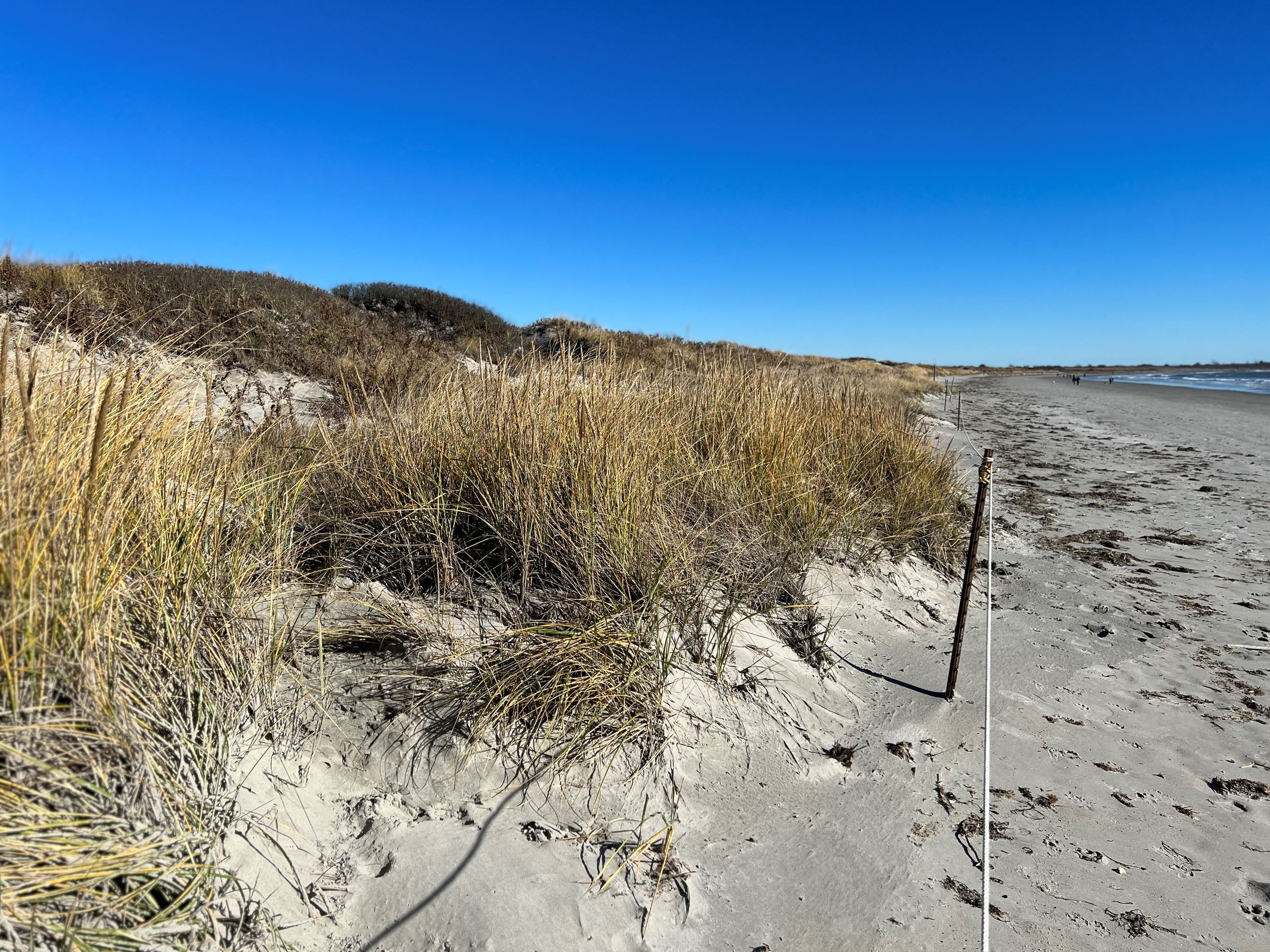
CONTINUING THE FIGHT AGAINST BEACH EROSION
MIDDLETOWN, RI (JANUARY 6, 2026) – Middletown continues its efforts to protect Second Beach now — and into the future.
This week, Department of Public Works crews will start installing new temporary erosion protection systems on the beach at the mouth of each pathway of the Sachuest Point Road summertime hotspot.
Town Engineer John Mello said the goal of the systems was to dissipate energy from heavy wave action that can damage the dunes, pathways and beach itself every winter season, especially during storm surge events.
Importantly, Paths 1, 4 and 8 as well as the one leading to the Second Beach Family Campground will remain open and available to the public throughout the off season.
“Every spring, we have to dig out all the paths because they get filled with sand,” Mello said. “The wave action damages our paths and the dunes get eroded. I don’t think most people realize how much energy the waves bring to the area and our goal is to help preserve the dunes, the plant life, the animal life — the beach ecosystem if you will — so it’s there for generations to come.”
Known as “temporary cofferdams” in the industry, the erosion systems are essentially giant tote bags made of high-strength, woven polypropylene geotextile fabric and filled with sand then placed strategically on the beach to form a temporary wall.
The way the erosion protection systems will be situated allows beach visitors to walk past easily without interference.
Mello said the town plans on testing several different designs for the systems to see which works the best to preserve the paths and dunes. Potential shapes included a straight wall, a “V” design, a staggered design and others.
Before going with the cofferdam option, Mello said other ideas were also researched. Those included temporary walls made up of large bladders filled with water, but that was eventually dismissed due to durability concerns. Concrete blocks and Jersey barriers were considered too.
The erosion systems will work in conjunction with snow fencing installed earlier in the offseason at the behest of the Beach Commission to catch and prevent sand from leaving the beach.
“What we’re seeing more and more is that we have to take an active role protecting and preserving the beach,” Mello said. “Everyone will still have access to the beach like they always have and we expect to remove the erosion control systems in April, well before the start of the upcoming beach season.”
Middletown Operations & Facility Manager Will Cronin said he was looking forward to seeing which erosion control system worked best. Cronin oversees Second and Third beaches as part of his duties with the town.
Town staff looked using the erosion control system at Third Beach nearby, but determined it wasn’t needed at this stage.
“Our beaches are one of our most valuable assets,” Cronin said. “They’re part of the fabric of Middletown and anything we can do to make sure they’re enjoyed by everyone is important.”
Beachgoers were asked not to climb or walk on the temporary protection systems once they’re in place because that might damage them and reduce their longterm durability.
“When they’re completely filled, the erosion control system bags stand four feet by four feet and about five feet high,” Mello said. “What’s great is once we’re done with them for the season, we empty them out, clean them up and store them for next year.”
In March 2025, the Beach Commission received a report from Coastal Systems Research & Planning that outlined steps the community could take to help preserve Second Beach.
Among the options recommended by the Cherry Hill, New Jersey environmental firm was doing whatever possible to keep sand on the beach and not removing rocks.
They also suggested limiting the dune cuts in the offseason to help collect sand better over the seven-plus month when the beach wasn’t actively used as much.
The Coastal Systems Research study came about after a particularly rough winter 2023 and spring 2024, when significant amounts of sand were stripped naturally from the beach by heavy wave action. That issue was not a problem going into Summer 2025.
To date, local leaders have been hesitant to pay to bring in sand from other locations to grow Second and Third beaches, citing the high cost and limited success rate of such operations in other parts of the country.
To read a report on the findings of Coastal Systems Research, go to https://mdl.town/NYCU-Preserve online.
Document Link: https://mdl.town/NYCU-Erosion-1626
About Middletown
The Town of Middletown is a vibrant municipality located on Aquidneck Island, known for its scenic beauty, historic landmarks, diverse economy and strong sense of community. For more information about all we have to offer, visit MiddletownRI.gov online.
Media Contact
Matt Sheley
Public Affairs Officer
401-842-6543
msheley@middletownri.gov