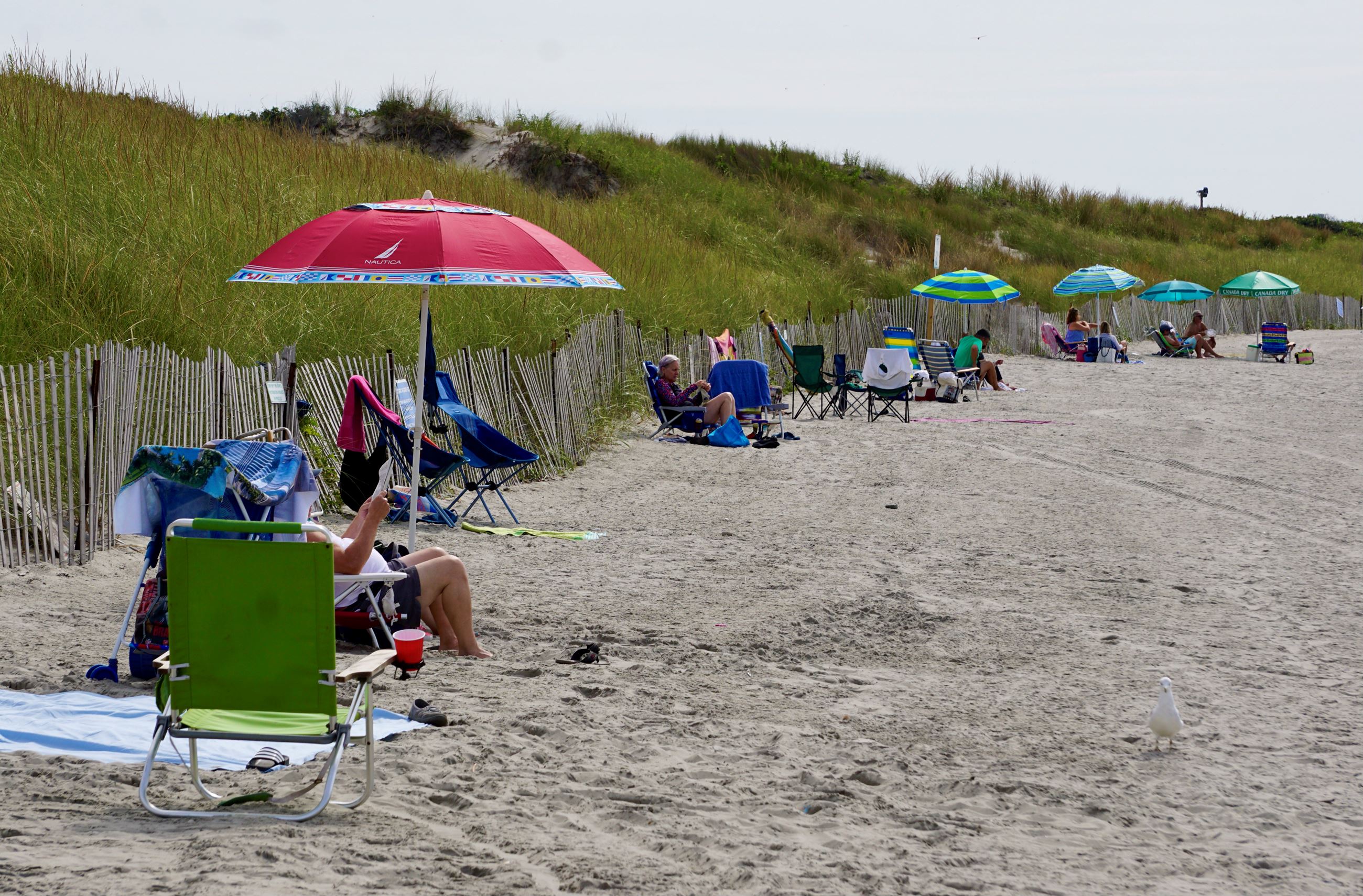
A coastal geologist updates Middletown officials on the status of Second Beach and offers recommendations for the future. Local leaders note the community is already saving for potential improvements down the line.
FOR IMMEDIATE RELEASE
CONTACT: Matt Sheley at (401) 712-2221 or msheley@middletownri.com
SETTING ASIDE FUNDING TO HELP SAVE THE BEACH
MIDDLETOWN, R.I. (OCTOBER 25, 2021) – Opening the meeting the other night, the Town Council heard a cautionary account about sea level rise and the slow but steady erosion of Second Beach.
By the end of the session, council President Paul M. Rodrigues encouraged his colleagues to start thinking now about what retired Rhode Island Coastal Resources Management Council Geologist Janet Freedman had to say and the steps that could be taken to preserve the Sachuest Point Road jewel forever.
Unbeknownst to most, the Town has been steadily socking away money since 2016 to potentially use for such an eventuality. To date, the balance in that account stands at close to $1.8 million.
“Based on tonight’s presentation by Janet, I look at it and say ‘If we’re putting away roughly $400,000 a year from the extra $5…in 10 years, you’re talking about $4 million.’
“If her facts are accurate, which I don’t see why they’re not…we’re going to need that fund to do what we need to do to keep that beach the crown jewel.”
For years, residents and visitors alike would say Middletown doesn’t have a true “town center,” a place where people from across the community meet up and enjoy each other’s company.
What those folks overlook is the mile plus long beach on Sachuest Point Road, rarely empty, regardless of the time of year or weather.
To help “harden” the beach from future storms, about $3.4 million in federal Superstorm Sandy resiliency money has been invested in the dunes, raising part of Third Beach Connector Road and other work.
In her report, Freedman said that work was helping extend the longevity of the beach, but more was needed.
According to Freedman, the erosion rate at both Second and nearby Third beaches was about a foot a year, maximum. While that might sound like a lot, Freedman said it wasn’t nearly as bad as some other locations across the state.
“It’s not really horrible when it’s compared to other areas,” Freedman said. “It’s really minimal. You really don’t have to think about erosion. Erosion happens during storms and during calm periods, the beach will recover. Erosion isn’t your big issue here.”
Rather, Freedman said one of the big items was making the dune network as strong as possible. Besides acting as a natural storm buffer, she said they capture windblown sand and help limit storm surge.
Freedman recommended several steps, including planting more beach grass and continuing to remove the invasive Carex kobomugi grass. She also suggested the Town further curve and elevate its natural walkways to the beach even more to help strengthen the dunes and limit sand spread and storm surge.
Pointing to work at Ocean City, Maryland, Freedman said the more curve the walkways have to the beach, the better. For more about the dune work that’s already taken place, visit https://www.middletownri.com/CivicAlerts.aspx?AID=456online.
“It makes it more difficult to get water and sand from one side to the other,” Freedman said. “While you’re considering all of this, you might want to consider curving these crossovers even more.”
Freedman said in addition to all the other known factors, there was also sea level rise to consider. While it might not be obvious over the course of weeks or even years, Freedman said it was a reality for the Town to consider.
“It’s not going to happen tomorrow. It could be quite a long time before this happens,” Freedman said. “There’s a lot of uncertainties on how fast this is going to rise, but certainly by the turn of the century, we’re going to see at least three feet of sea level rise regularly, every day.”
Asked if a seawall would help, Freedman said it was no cure all, no matter where it was placed.
“If you put in a seawall, if you put one on the beach, you’re going to lose the beach,” Freedman said. “Because the water is going to rise and it will run up against that wall. You don’t want to do that on the beach. If you put it in around the parking lot and the road, it would protect from sea level rise, but not from rainwater.”
From her position, Freedman said the best bang for the Town’s buck would be elevating the beach area over time.
“My viewpoint is if you keep elevating slowly and over time, probably elevating the landscape would keep the beach and the facilities open,” Freedman said.
If the Town is strategic with its approach, Rodrigues said money for any solution could already be in the bank.
The Town started its “capital replenishment” campaign in 2016, when the daily fee for parking at Second and Third beaches was increased $5. At the time, local leaders said that funding would be set aside in a dedicated account to pay for future work at the beaches.
According to totals from the Town, approximately $400,000 has been put into the account the past several summers. Due to impacts from COVID-19, the program was suspended for the summer of 2020, but reinstituted this past summer.
“This fund was actually developed for these types of things,” Rodrigues said. “We just need to keep a close eye on that.”
“It’s a really good thing the Town has made this decision and set aside the money,” Town Administrator Shawn J. Brown said. “Even though it’s only been a few years, we’ve saved quite a bit.”
“I think because of the cost…it’s kind of a known that this isn’t something that comes cheap, so it’s better to plan now if we needed to than to all of the sudden have a need and no plan in place,” Councilwoman Terri Flynn said.
####