The Middletown Historical Society relaunches an effort to stress the importance of stonewalls in Middletown. Part of the outreach is "Stonewall Recognition Day" the Monday before Thanksgiving, which will be discussed Monday, Nov. 15 by the Town Council.
FOR IMMEDIATE RELEASE
CONTACT: Matt Sheley at (401) 712-2221 or msheley@middletownri.com
SAVING STONEWALLS
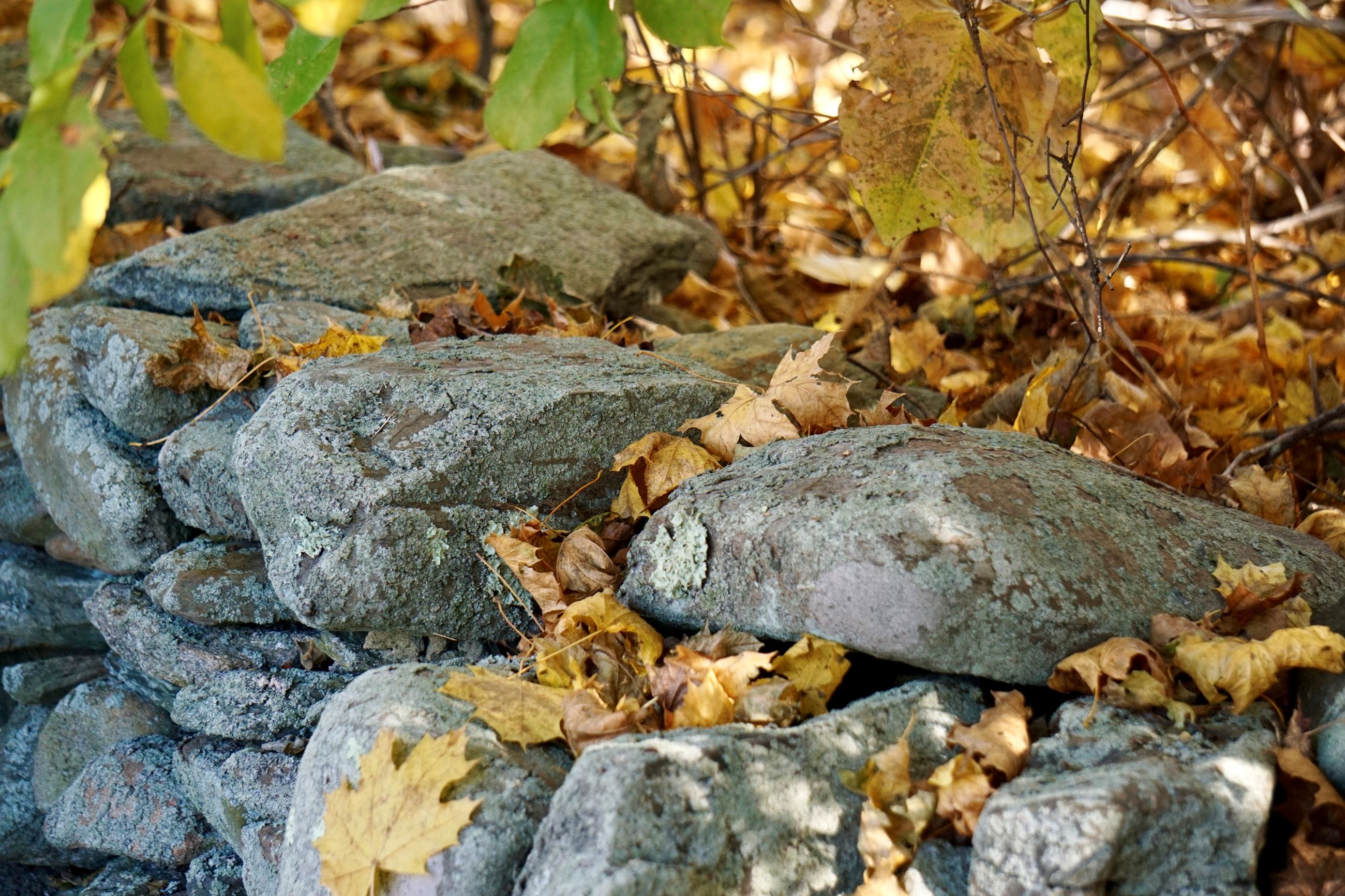
MIDDLETOWN, R.I. (NOVEMBER 12, 2021) – Look around Middletown and stonewalls are seemingly everywhere.
For Mary Dennis and the Middletown Historical Society, they’re more than just a backdrop to the community, they are an important part of Middletown’s history.
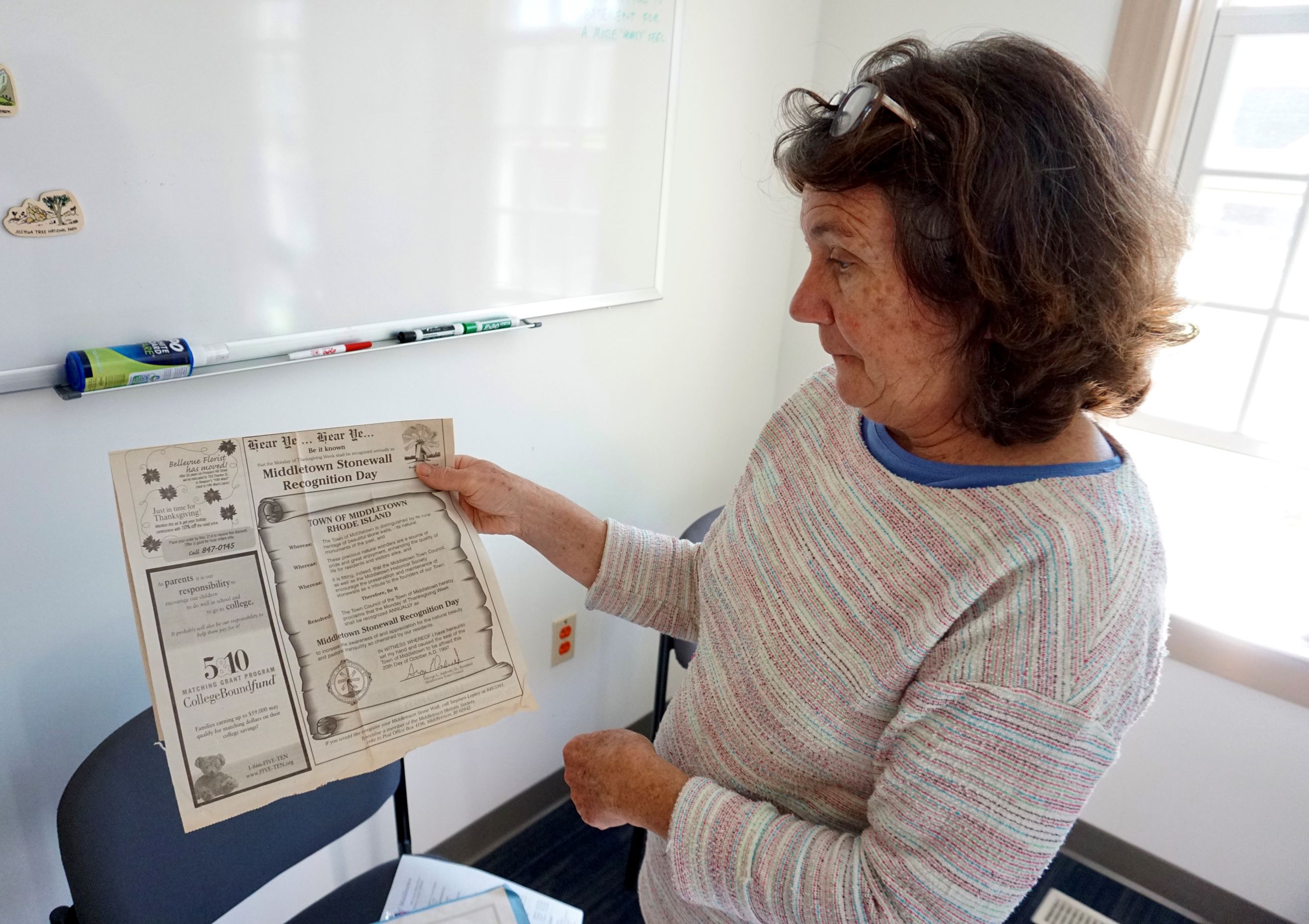
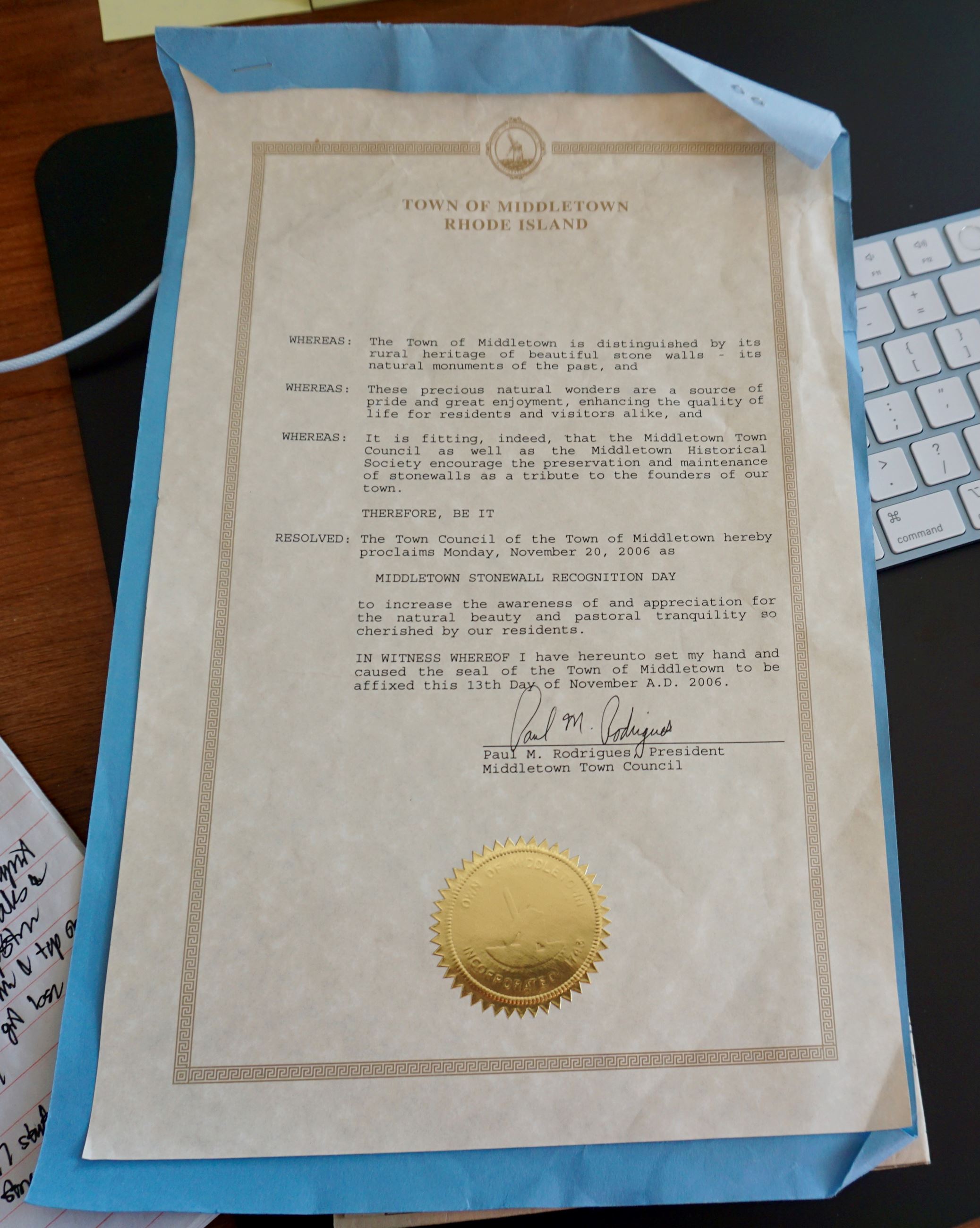
Recently, the President of the volunteer historical society unearthed a somewhat forgotten Town resolution declaring the Monday before Thanksgiving as “Middletown Stonewall Recognition Day.”
Looking to revive interest in the day and stonewalls themselves, the item is expected to appear before the Town Council at its next regular meeting on Monday, Nov. 15 at 6 p.m. in Town Hall.
“I have no doubt that some of these walls have been here longer than the Town itself,” Dennis said. “People were living in what’s considered Middletown in the 1600s, so I’m sure some of the walls date back to then because the farmers here had to put their rocks somewhere. ‘Stonewall Recognition Day’ was created for a reason and I think it’s a great way to remember who we were and where we’re heading.”
In the press to make way for development on certain properties, sometimes physical features like stonewalls, trees and other historic items can disappear unnecessarily.
Fortunately, the Town of Middletown has an ordinance on its books protecting historic stonewalls, which were built in the 16th through 20th centuries and designate a property boundary between farms or agricultural activities on a single farm. Under Chapter 97 of the Town code, those rules went into place in 1998.
Based on historical society documents she came across recently, Dennis said protection of stonewalls wasn’t a ceremonial move, but something taken very seriously.
When “Stonewall Recognition Day” went into effect in the late 1990s, she said homeowners would file a request with the Historical Society to come check out the stonewalls on their property. If the stonewall passed inspection, the homeowner would receive a certificate acknowledging its historic value.
Dennis said the group’s original goal was to get 50 stonewalls certified, a number they exceeded by a significant margin.
The main reason there are so many stonewalls was because the heavy reliance on agriculture in the early days of Middletown and the need for clear, obstruction free fields, she said.
“They would plow and farm this soil year after year and they’d have to do something with the stones,” Dennis said. “Like the Europeans did back home, they used stones to start designating their property boundaries, something that was a completely foreign concept to the native populations who lived here.”
As time moved forward and the area began to rely less on agriculture and more on manufacturing and “business,” Dennis said many stonewalls remained – as they do today.
“When I was in college, I remember having friends from the Midwest here and they couldn’t believe the number of stonewalls all over the place,” Dennis said, chuckling. “If you’re from here, sometimes they blend into the background, but that doesn’t mean they’re not important or significant. To me, they’re a nod to our agricultural roots as a community.”
Town Administrator Shawn J. Brown thanked Dennis and the Historical Society for reviving “Stonewall Recognition Day.”
“It’s traditions like this that help make Middletown such a special place to live, work and play,” Brown said. “Our past is important to us, but we’re also moving forward the right way and working to grow and mature the right way.”
Dennis said looking through the box of paperwork she located recently gave her a new appreciation for the Town’s historic stonewalls and their upkeep. Unlike many of the newer stonewalls that use concrete to stay together, she said there was a true art to building and maintaining a historic stonewall.
“They used gravity and physics to keep these walls together generation after generation,” Dennis said. “If the wall is in pretty good shape and the capstones are still there, all you have to do is take a sledge(hammer) and tap the stones back into place and it will tighten the whole way right up. It’s amazing how these were really built to stand the test of time.”
####