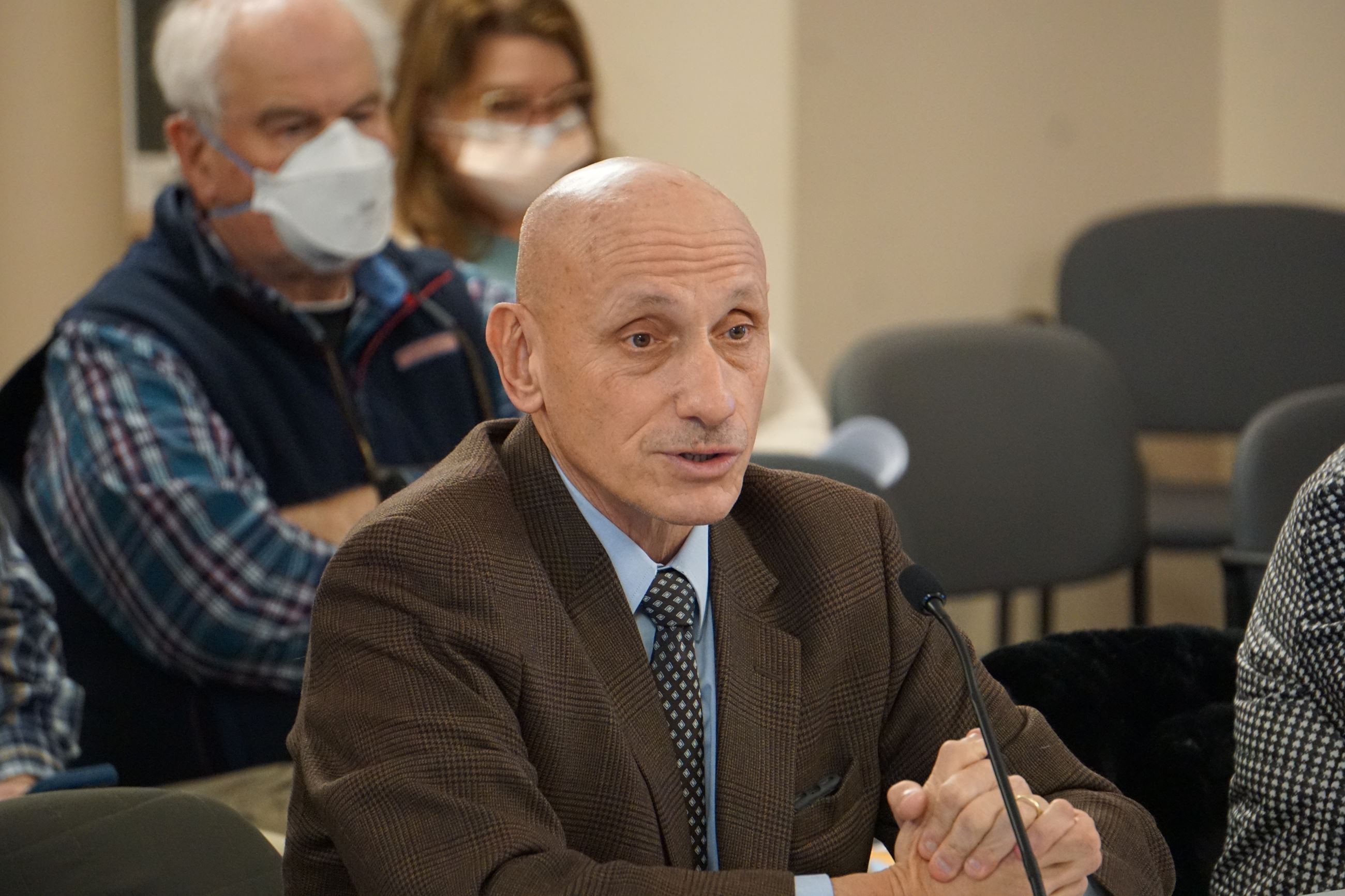
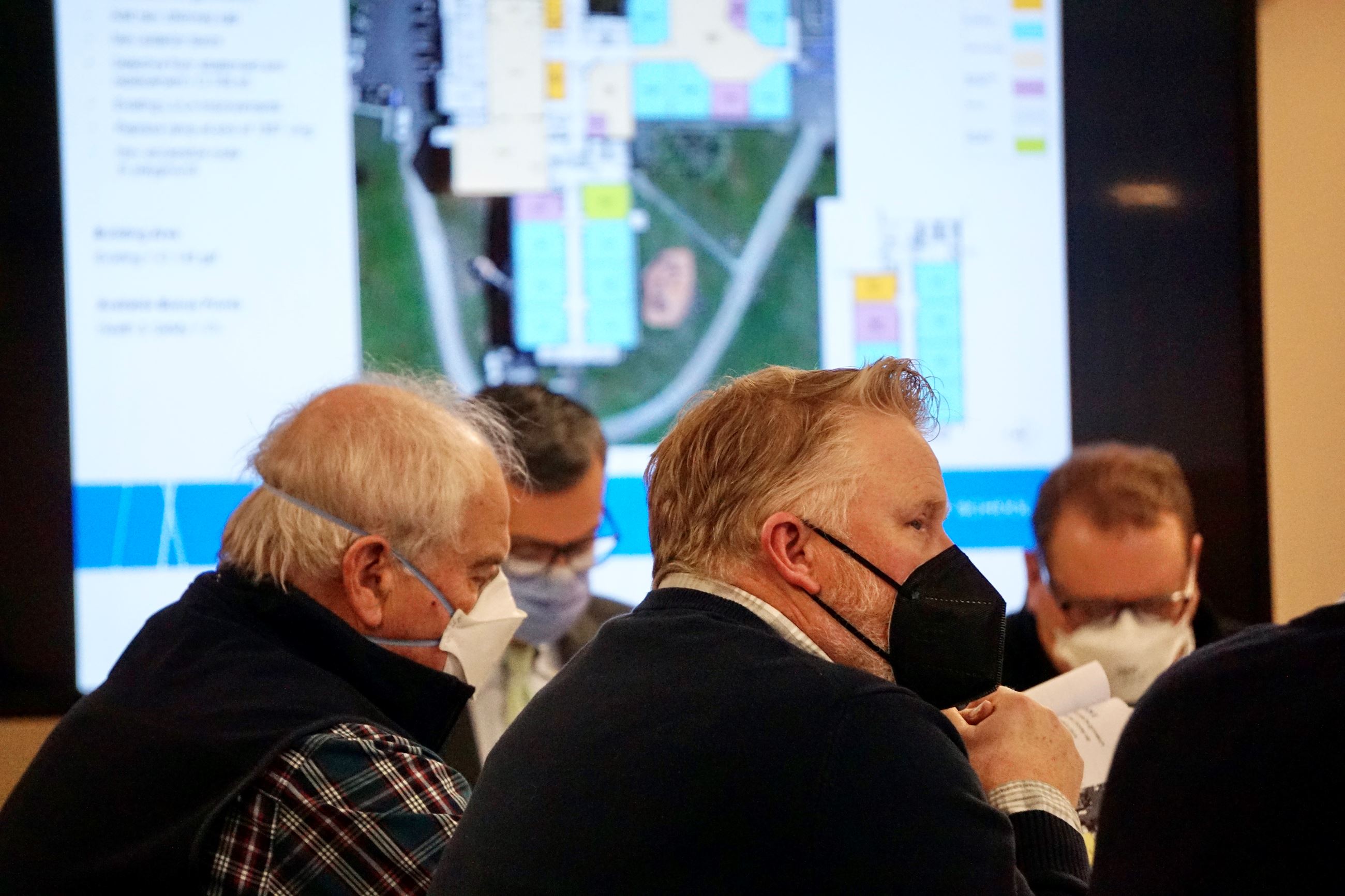
The Town Council and School Building Committee hold a workshop summit on the fate of the buildings and grounds. Out of the discussion, there seemed to be consensus that something needed to be done that didn't break the bank.
FOR IMMEDIATE RELEASE
CONTACT: Matt Sheley at (401) 842-6543 or msheley@middletownri.com
TOWN COUNCIL FACES BIG DECISIONS ON SCHOOLS ON JAN. 18
MIDDLETOWN, R.I. (JANUARY 10, 2022) – The Town Council has big decisions about what to do with its school buildings and grounds.
During a summit Monday night with the School Building Committee from Town Hall, the council heard about the latest proposal to put a $90 million bond before voters in November, with $40.7 million of that cost picked up in reimbursements by the state.
According to school architects and consultants, the newest plan focuses on solving serious problems at Middletown High and Gaudet Middle schools, potentially extending their useful lives by 30 to 40 years or more. While upgrades would be done at the elementary schools, educators and Town officials both said the long-term future of those buildings needed to be put under the microscope down the line.
The council is scheduled to discuss the matter again Tuesday at 6 p.m. in Town Hall. That night, the council is also expected to get a third-party independent report about the Town’s bonding capabilities without adversely impacting the community.
“I think it’s a lot to chew on, but it’s not going away,” council President Paul M. Rodrigues said. “Whatever we end up doing, I do believe we do have to do something. It’s just a matter of gaining that comfort level and that understanding of it and really being to educate the public on it. I think that’s the key part. It’s not about today. If we can get these schools another 40 or 50 years, that’s monumental.”
During the wide-ranging conversation that drew every Town and school heavy hitter, officials on both sides agreed that flexibility was critical to whatever the community decides to do with the schools.
Pointing to the high school as an example, Principal Jeff Heath has been outspoken on the need to have classrooms that could be transformed in moments, not years, a position he repeated Monday night. For more, visit https://www.middletownri.com/CivicAlerts.aspx?AID=642 online.
“Flexibility of the space at the high school is what we’re all interested in…” Heath said. “We don’t know what the next five to 10 years are going to look like…and the ability to change those spaces as needed will be a real asset.”
“The key to this is flexibility,” Councilwoman Barbara VonVillas said. “We’re not talking about building something that is locked in concrete.”
“Things have changed dramatically since I went to high school…” School Committee Chairwoman Theresa Spengler said. “Who would have in a million years imagined computer labs all over the place and cell phones didn’t even exist and we didn’t know what this little device was and now we live by this. In 10 years from now, our whole curriculum could be different. We need to create flexible space.”
In mid-December, the Building Committee released an ambitious, exciting plan to remake each one of the school buildings and bring them into the 21st century.
The price tag on the projects ranged from $96 million for infrastructure and safety upgrades only to $178 million for sweeping upgrades across each building.
One of the selling points was the reimbursement money available from the state of Rhode Island to help pay for the work. According to preliminary numbers from DBVW Architects, the schools are eligible for at least a 35 percent reimbursement rate on any of the projects discussed. They’ve said those figures could climb up to close to 50 percent if certain criteria are met, meaning close to 50 cents on every dollar would be paid back to the community.
On Monday night, Building Committee officials and their architects leaned to a new hybrid “Option E” plan. Under the proposed scope of work, the deficiencies of both the high school and middle school would be addressed along with “targeted” educational improvements. “Option E” would also close the Oliphant administration building at 26 Oliphant Lane and move those offices and the Newport County Regional Special Education program to new space on the Gaudet campus.
Due to condition of the buildings, rising costs and lesser diminishing bang for the buck, the elementary schools would see some deficiencies addressed. Long-term, school officials and their architects indicated it might make more sense to at least replace Aquidneck Elementary School, with such costs projected now at $40 million for an entirely new school building.
Preliminary figures from the Town showed the “Option E” bond was projected to increase the tax rate 95 cents per $1,000 of assessed residential value. That means a property owner with a home assessed at $400,000 could expect to pay $380 more in taxes in Fiscal 2023, or a $1 a day. The current tax rate is $12.02 per $1,000 of assessed residential value compared to $17.23 per $1,000 of assessed commercial value.
After the council makes its determinations about what the community should do with the school buildings, education officials said the plans would be fine tuned. From there, they would be submitted to the state Department of Education for “Phase II” approval.
The biggest step, they said, would be securing approvals from voters on Election Day Nov. 8 to okay the bond, which would be paid back over 20 years.
Saying they understood it was a big ask for the community, education officials said if the bond wasn’t approved this round, it didn’t mean the problems went away. They also noted the $10 million school safety and improvement bond okayed by voters in 2016 essentially “saved” each one of the buildings from a much earlier demise.
“We have been putting Band-Aids on these schools since they were built,” School Building Committee Co-Chairman Charlie Roberts said. “We have really not done that many significant capital improvements. The $10 million that we spent on the schools saved the schools in our opinion. Those roofs that were put on the buildings have saved those schools and have gotten them to where they are right now, so you should be commended for that, but the bottom line is…they’re at their life expectancy right now.”
####