#MiddletownRI firefighters go through intense training to help respond even better to emergencies, disasters -- and everyday calls.
Click Fire Training Video To See More Of A Recent MFD Training Session
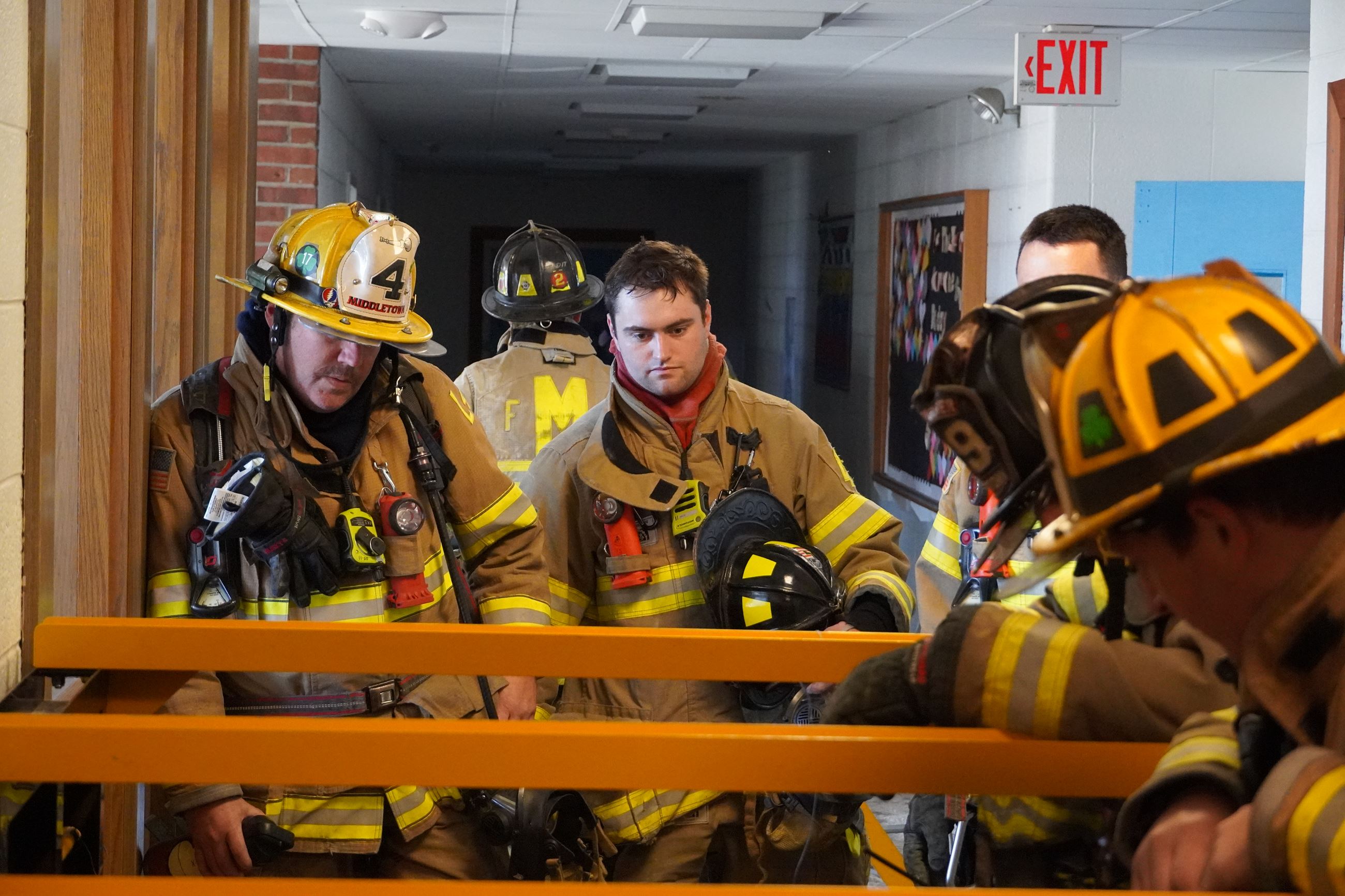 GETTING READY FOR ANYTHING
MIDDLETOWN, R.I. (NOVEMBER 19, 2024) – Out of nowhere, a “Mayday! Mayday!” call pierced the air, followed by loud beeping sounds from an emergency radio.
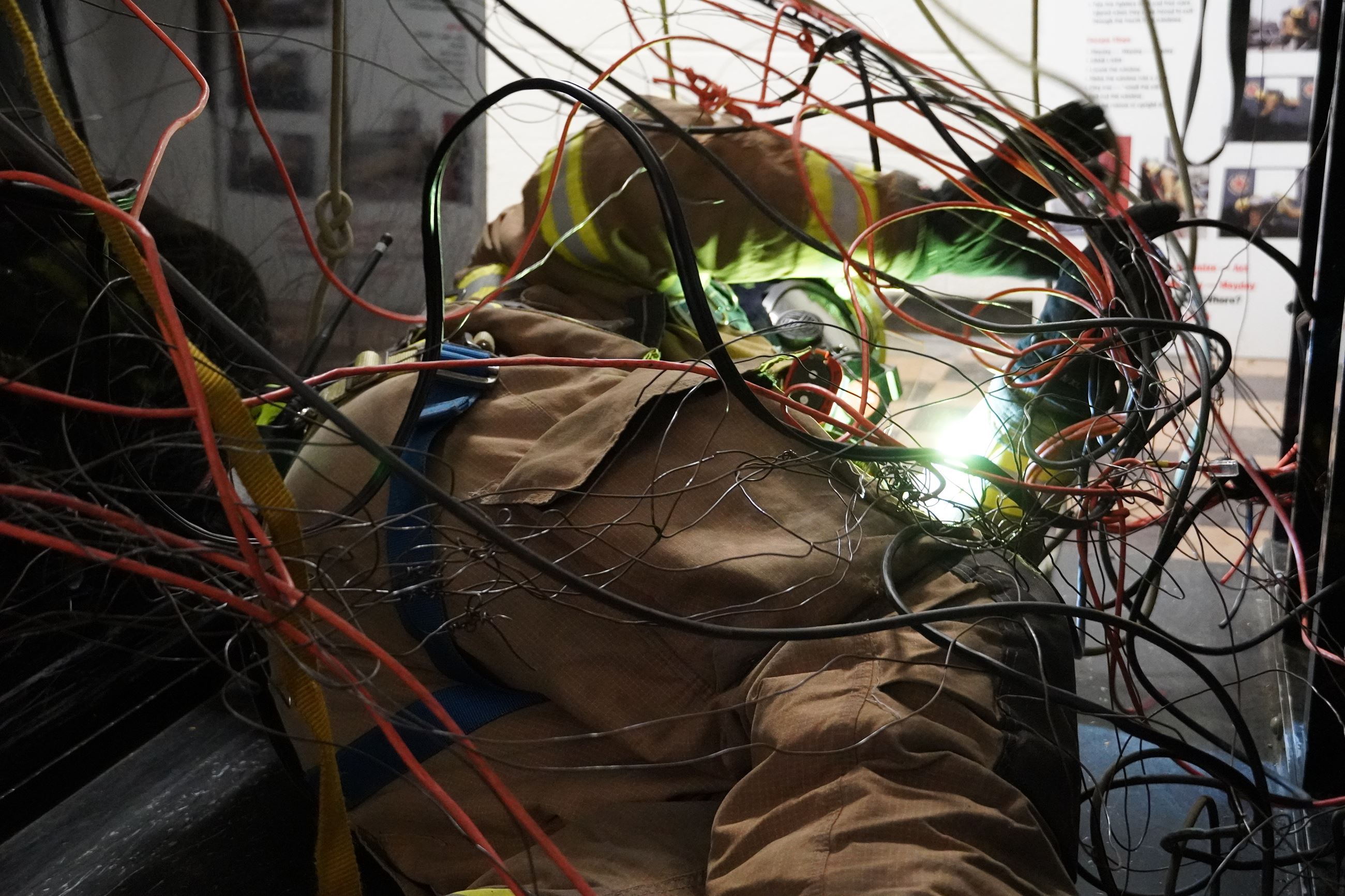
A Middletown firefighter was caught in a tangle of wires after a ceiling collapse and unable to escape.
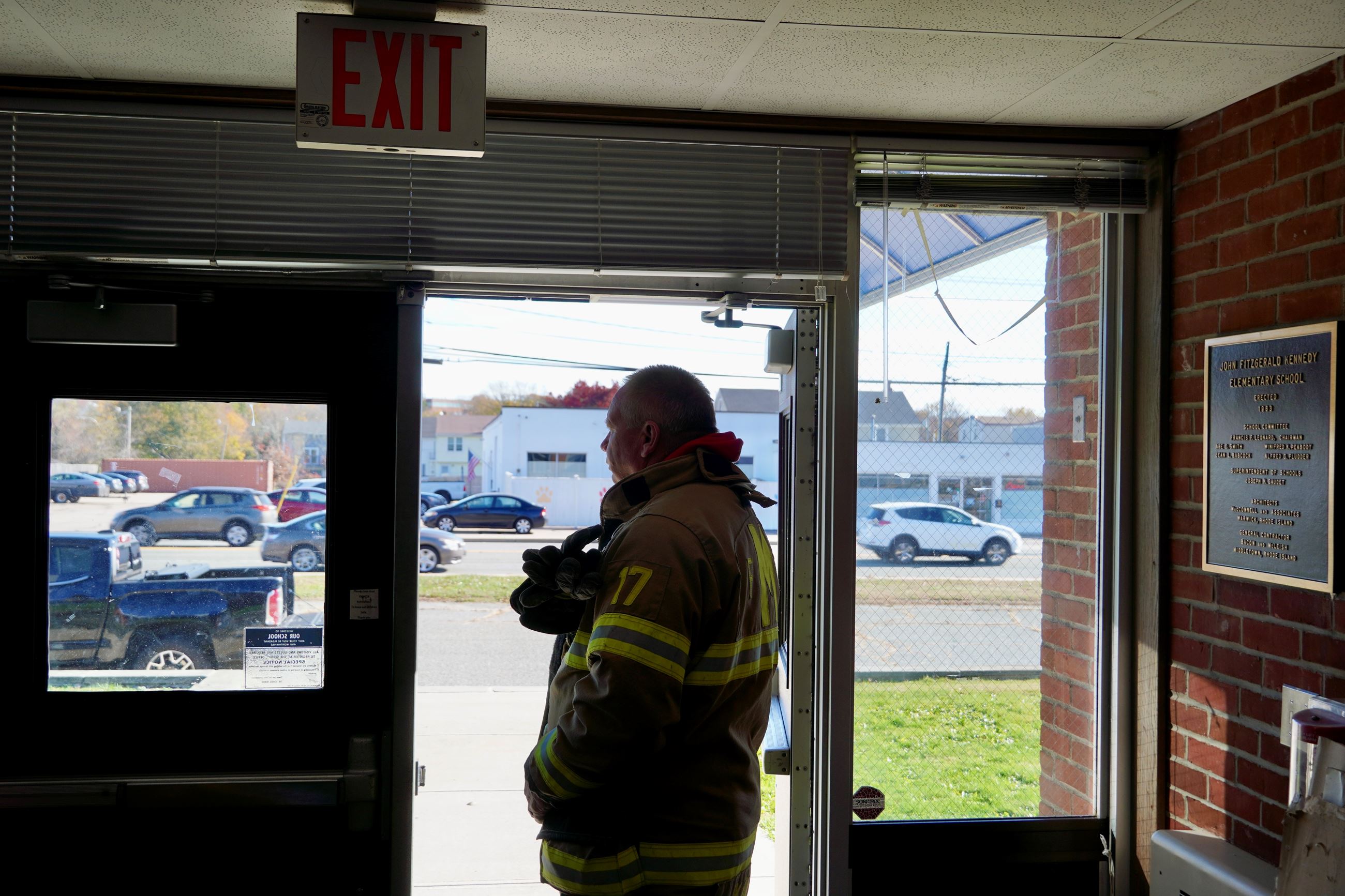
Steps away in the front hallway of the old Kennedy School, another smoke eater was busting down a sheetrock wall and squeezing through the new opening after his means of egress was cut off.
Firefighter Ben Godek said thankfully, both nightmare scenarios weren’t actual emergencies, but part of International Association of Fire Fighters (IAFF) training sessions to provide survival skills to firefighters under extreme circumstances.
Middletown Fire is believed to be one of the first departments in the state to go through the intense program, which combines 25 hours of classroom work with hands-on exercises like the ones held in the former West Main Road elementary school recently.
“These calls, mayday calls where a firefighter is trapped, are the most challenging we face,” Godek said during a quick break in training. “The idea is to simulate actual conditions as much as possible so we’re all more comfortable and familiar with what to do if we ever encounter something like this.”
Every year, more than 100 firefighters are lost around the country in the line of duty and more than 80,000 are injured.
Unfortunately, the disentanglement box loaded with wires and the wall breaching scenarios were modeled after real life situations where a firefighter died.
Trying to reduce those numbers and make sure everyone gets home to their families safely every night, the IAFF has been running similar Fire Ground Survival training program developed in December 2007.
Godek said he and Lt. John Jordan and Firefighters Zach Boudria and Zach Smus went to a fire academy in New Hampshire in August to get trained in the IAFF standards.
He said what they saw and experienced was eyeopening and needed to be shared with the rest of the department. In order to do so under IAFF standards, a department must have at least two certified trainers to lead educational sessions.
As time allows, members of the department gather together, sometimes in the Wyatt Road fire station, other periods at Kennedy School or different locations around town.
All shifts are covered during each training session, so there’s no loss of service to Middletown. And if the emergency was big enough, firefighters will be pulled out of the training to assist.
Unlike some training, each member of the department goes through the coursework from the newest private to interim Fire Chief Robert McCall and the battalion chiefs. That way, everyone can feel and truly understand the demands and stress they’re all facing.
The training used equipment provided by IAFF, including the heavy duty metal disentanglement and wall breaching units. Both look like something from the popular sports entertainment show American Ninja Warrior on overdrive.
The disentanglement box was a large black and yellow metal structure filled with a mess of wires that seemed like it would take days to unravel. Trainers said the idea was to simulate firefighters having to crawl through a confined space snarled with wiring like during a ceiling collapse.
As for the breaching wall, pieces of wallboard were placed into designated gaps, two barely large enough to fit a normal sized person, let alone one outfitted with dozens of pounds of firefighting gear.
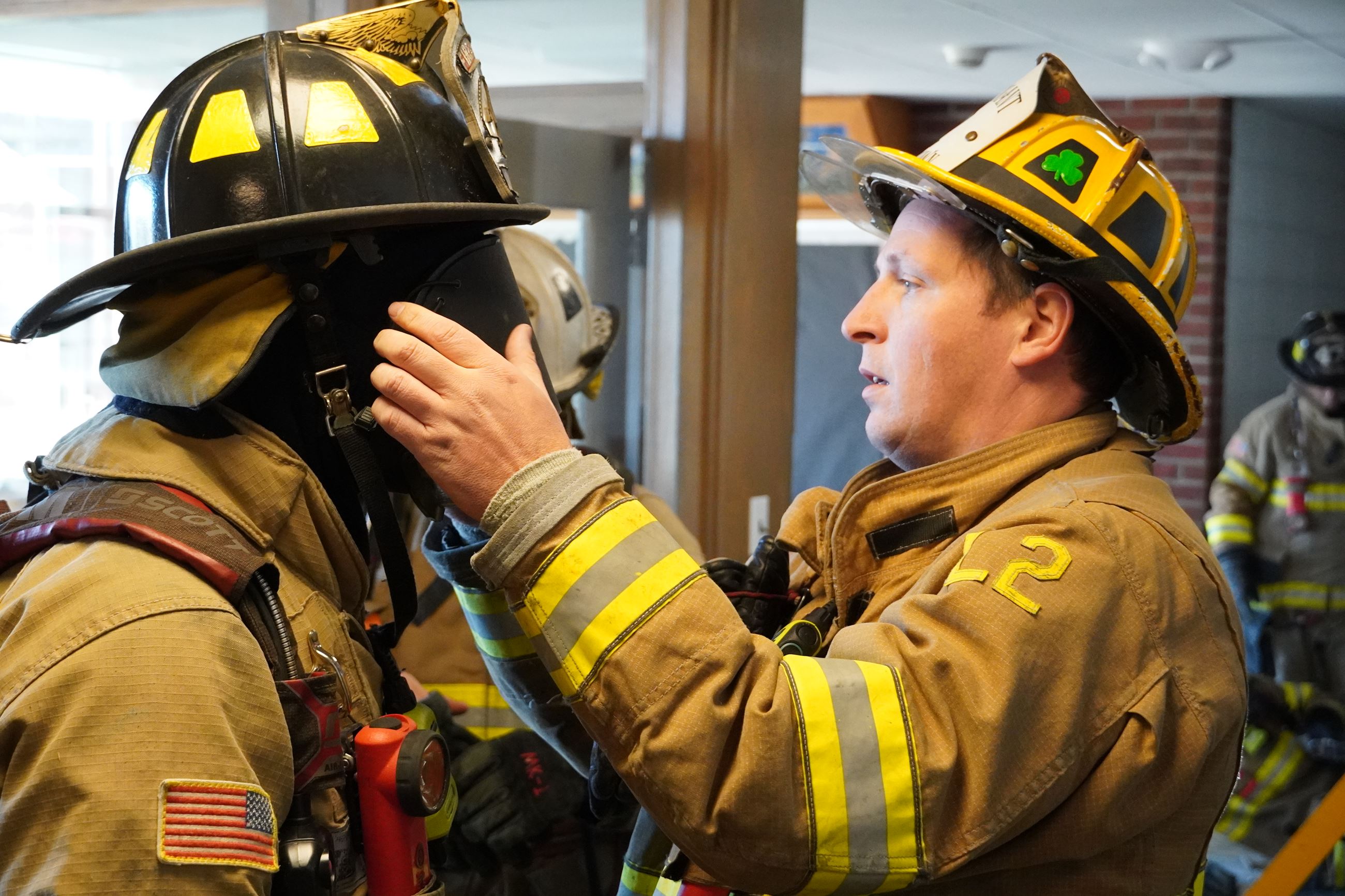
Before tackling either, firefighters were reminded to stay calm and to breathe. The idea of leaving an axe or breaching tool behind was also suggested if it meant the difference between surviving or injury — or worse.
“This type of training is kind of sobering for us,” Godek said. “It’s an in your face reminder of what we signed up for — to put ourselves in harms way to help people — and there’s a risk with that. The more we get used to it, the better we’ll all be able to perform when it’s necessary.”
Each firefighter wore their usual turnout gear throughout. This included a heavy full protective suit, gloves, boots, helmet, emergency radio and air pack.
Like any simulation, instructors said they had the ability to ramp up the stress level to breaking point levels.
Some opted to go through the wire box and breaching wall with blackout masks, which made it impossible to see anything, forcing firefighters to rely on touch and sound.
Trainers provided words of encouragement and advice as firefighters took on the obstacles. In each scenario, firefighters were told that sometimes to go forward, the best choice was to go backwards first to avoid entanglements.
One of the trainers Jordan said he actually swapped up the placement of his emergency radio as a result of what he experienced during the training previously.
Originally, Jordan said he clipped his radio to his gear, but switched to the more common method of having it unclipped so it could be relocated easily and not snag onto a wire, frame or other hazard. Several firefighters going through the training ran into similar problems like he did previously.
“It’s been a really good experience for everybody,” Jordan said. “All of these things, they give you an idea of what it might be like. Hopefully, none of us have to use it, but it’s better to be too prepared than not enough.”
“In firefighting, we have a saying that ‘You can do everything right and still end up in a bad place’ and this training definitely shows you that,” Godek added. “I know I’ve gotten a lot of good feedback personally from the training and how much everyone is taking away from it.
"Fires are unpredictable, volatile and ruthless and they will not always go according to our plans. Smoke, low visibility, lack of oxygen, structural instability and an unpredictable fire ground can cause even the most seasoned firefighter to be overwhelmed in an instant.”
The training also helped show supervisors how firefighters react to different conditions, something worth noting depending on the call and circumstances. This helped command staff play to each firefighter’s strengths and avoid placing them in a bad situation if it can be avoided.
At the end of the training, firefighters will be asked to go through a comprehensive course set up at the fire station to put their skills to the test.
Interim Fire Chief Robert McCall applauded the entire department for their energy and enthusiasm with the training. He said prepping for the worst was always advisable, especially in the emergency services fields.
During one training session, McCall ordered pizza for lunch for the troops as a show of thanks for their hard work. Trainers also applauded Home Depot, Foodlove and Dunkin’ for their donations to the cause.
“This Rapid Intervention Training (or RIT) is invaluable,” McCall said. “So many times, we see things go bad throughout the country on firegrounds. These incidents usually happen within minutes of arrival on the fireground. This usually means not everything is set up, additional fire companies are not yet on scene. So, being able to rescue yourself or with your original crew, can be life or death.”
McCall commended the work of the Middletown instructors, who went to New Hampshire to complete the training over the course of three days.
“It’s a tough program to get through,” McCall said. “They have been great in driving home the importance in this program and unfortunately, all the stations are based on actual events that have happened to firefighters across the United States. The saying in the fire service is that all of our training books and programs are history books, we learn from our past mistakes so that it doesn't happen again.”
And McCall praised the rest of the department for its interest and hard work throughout the experience.
“The rest of the fighters going through this training have said nothing but great things about it,” McCall said. “They have been learning some hard but valuable lessons over the past few months. Middletown is fortunate to have some of the best trained firefighters anywhere and we want to continue this moving forward for Middletown Fire — and the rest of the community.”
Document Link: https://mdl.town/NYCU-Tangle
About Middletown
The Town of Middletown is a vibrant municipality located on Aquidneck Island, known for its scenic beauty, historic landmarks, diverse economy and strong sense of community. For more information about all we have to offer, visit MiddletownRI.gov online.
Media Contact
Matt Sheley
Public Affairs Officer
401-842-6543
msheley@middletownri.com